Advice & Tips

How do I choose a kitchen knife?

Table of content
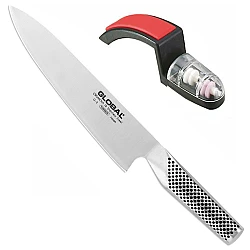


Do you like to cook and are you still cutting with a cheap or dull knife? Then it's time for a nice kitchen knife! As a specialty shop we have a very wide range of kitchen knives!
With a good and sharp knife you can cut faster and safer. Moreover, cutting becomes fun!
Are you new to kitchen knives and looking for information to help you make your choice? On this page you will find useful information that will help you understand what your choice will depend on.
Of course you are more than welcome in our shop! Here you can feel and see the knives (you can smell them too) and we can advise you personally. If that is not convenient, we are also available by phone, email or WhatsApp.
1. Knife or knife set
In most kitchens you will need more than one knife. Different knives are useful for different tasks. And it allows you to do different things in a row without having to clean your knife all the time (to prevent taste transfer).
When buying a knife, you can ask yourself if you want to start with one knife and then expand. Or do you want a set of two or more knives? Often people choose to start with one knife and later on expand so they can choose a nicer and more expensive knife. This way you can spread the purchase over a longer period of time.
Below you will find the four most popular knives in order of popularity.
Cook´s knife / Gyuto / Santoku
The first knife that is usually chosen is a chef's knife (or gyuto for Japanese knives) or santoku. This is the most versatile knife in the kitchen. The width of the blade makes it easy to cut with the knife along your fingers. The length of the blade (20cm on average) allows you to cut large quantities in one go. Kitchen knives come in handy versions with blades from 16 to 20 cm. The most common is a 20cm chef's knife. Professional chefs usually choose 23cm.
Utility knife / Petty
As an addition to a cook's knife, a small knife (also known as an office knife) is very handy for small tasks. For example, you can use this for small cuts in vegetables and fruit.
Meat knife
A meat knife is often chosen as the third addition. A meat knife (or carving knife) has a narrower blade than a chef's knife. This means that the meat does not stick as much to the blade, which makes it easier to cut through and obtain nice slices.
Bread knife
If you often eat (fresh) bread a good bread knife is a pleasure to work with. No more crumbled slices, but nice, intact slices of bread. Because of the serrated edge the bread knife cuts through hard bread like a knife through warm butter.
2. Construction of a knife
Here you can read about the different parts of a knife. When you are choosing a knife you will look at
- the handle: material and shape
- the blade: thin or thick, long or short
- The Ferrule: full or half.

Handle / Grip
A good handle is ergonomically shaped and has no unfilled seams where dirt can collect. The handle can be made of wood, plastic or steel. Some materials, for example special woods, influence the price of the knife.
The blade
This is the part of the knife that cuts.
The shape of the blade depends on the purpose of the knife. A chef's knife, for example, has a wide and long blade whereas a fillet knife has a flexible, thin and narrow blade.
Head
The head is the transition from the blade to the handle.
There are different types of heads. You will usually see a complete head or half a head. The head ensures good balance of the knife, and protects your hand from sliding across the blade. A full head has a thickening in the heel of the blade. It is not sharp and cannot be used to cut.
The disadvantage of a full head is that it gets in the way when sharpening. The newer knife series nowadays do not have a full head so you can cut with the whole blade.
For more about the naming of the parts of a knife click here
3. European or Japanese
Most knives come from Germany, France or Japan. There are clear differences between a German, French and Japanese kitchen knife. Japanese kitchen knives also have very specific types such as a deba, Usuba or yanagiba.
European knives

European knives are thicker and made of less hard steel than Japanese knives. This makes them less brittle and more forgiving to use (less damage and easier to sharpen).
The combination of the less hard steel and the thicker blade means that you can use the knives for almost any cutting job. You don't have to worry so much about damaging them.
The softer steel means that European knives do not stay sharp as long and do not give the same cutting feel as a Japanese knife.
Looking for a knife you can cut anything with? Then a Wusthof or Zwilling is the best choice.
Japanese knives

An important feature of Japanese knives is that they are made of harder steel. This allows the blade to be made thinner. This hardness also allows them to be sharpened at a sharper angle (15 degrees instead of 20 degrees with European knives).
A logical consequence of a thinner blade that is sharpened at a smaller angle is that you encounter less resistance when cutting. Japanese kitchen knives therefore offer unrivalled cutting pleasure. The disadvantage is that they are more fragile, more susceptible to damage and more difficult to sharpen.
In short you can say that Japanese knives are for people who are careful with their knives.
A good Japanese chef knife does not have to be more expensive than a European knife. Among the Japanese chef knives there are some for the real enthusiasts and even collectors. These knives can cost up to several thousand dollars.
Read more about Japanese and German knives here
4. How much does a good kitchen knife cost?
Price often plays a role in your choice of a kitchen knife. "How much should a good knife cost?", you might ask. This actually depends entirely on the expectation you have.
The price of a kitchen knife is determined by the quality or exclusivity of the materials used and the amount of handling required to make the knife. Think about the type of steel used, the material of the handle and the level of finishing.
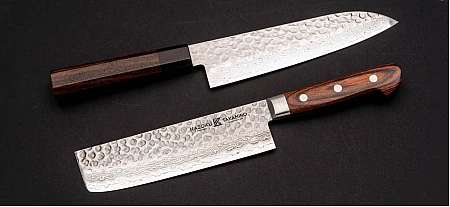
Do you currently own a kitchen knife from Ikea or from a savings campaign at the supermarket? Compared to those, we have a number of models of a few tens of Euros which will already improve your quality. See for example the Kazoku Nisei knives. Every step up in price you take is for the better, in terms of quality, materials and finish.
Are you looking for a good balance between price and quality? Then take a look at the Kazoku line.
Want to read more about kitchen knives? Check out our kitchen knife encyclopedia.


Leave your comment
Comment