Cast iron pans: all you need to know

Table of contents:
Cast iron pans with or without enamel coating?
It's best not to put a cast iron pan in a dry place. This can cause it to rust. The best thing to do is to add a drop of oil to the pan after every wash and smear it over the entire surface.
For those who find this too much work, there are also cast iron frying pans for sale with an enamel layer. This layer is made of molten glass and protects the pan from rust and acids. Enamel is very durable and resistant to chemicals.
The enamel layer means that the natural non-stick coating that a pan without enamel would create over time, does not work as well. With a pan without an enamel layer the oil will adhere better and you will get a better non-stick coating.
With such pans there is a possibility that the enamel will break, although this hardly ever happens with quality pans like Le Creuset and Staub.
Advantages and disadvantages of cast iron
Like any material, cast iron has advantages and disadvantages. Although they require more maintenance than a normal non-stick pan, they have unique advantages that make them so popular.
Cast iron advantages
Stays at temperature for a long time
It takes a while for a cast iron pan to heat up, but when it does, it stays hot for a long time. Cast iron is therefore the best choice for a frying pan. It allows you to braise/stew nicely at a low temperature.
Good for life
The pan is virtually unbreakable and will last for generations. However, you do need to be careful with temperature shocks and dropping the pan.
Better all the time
A cast iron pan is porous (permeable by pores) and by oiling it a lot, a natural non-stick layer is formed. The oil gets into the pores of the pan and merges with the pan. This means the pan fires better and better.
Disadvantages
Heavy weight
Cast iron pans are heavy. They are less suitable for shaking the pan.
Flimsy
The pan should absolutely not be allowed to fall, as it could break. You also have to watch out for large temperature differences. Don't go from very hot to very cold at the same time; this will cause the cast iron to crack.
Maintenance
A cast iron pan does require more maintenance. It should never be completely dry; this can be prevented by rubbing a little oil into the pan after washing.
No anti-stick coating
There's no chemical non-stick coating on the pan. Especially when the pan is new you will need a little more oil when frying. High-protein dishes are more difficult to prepare in a cast iron pan, as they tend to stick together more. One solution is to fry with a little more oil.
Not suitable for acidic ingredients
The natural non-stick coating that a cast iron pan develops over time is sensitive to acidic ingredients. This makes the pan less suitable for making tomato sauce, for example. This will damage the non-stick coating.
How should cast iron be fired?
There are many different theories and methods for non enameled pans. The most popular and also the easiest way to fire cast iron pans is as follows:
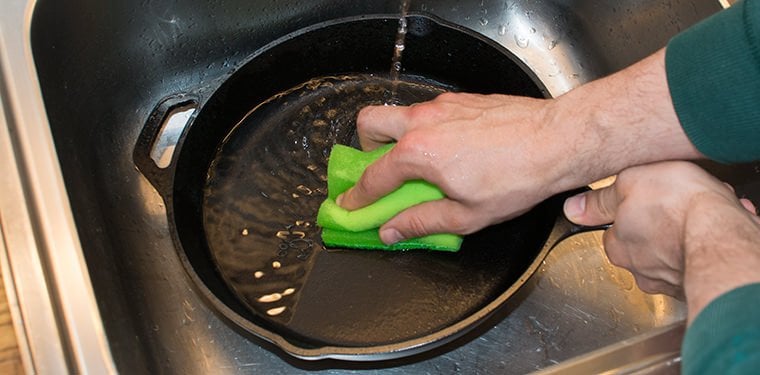
Step 1: Clean the pan thoroughly with soap and water
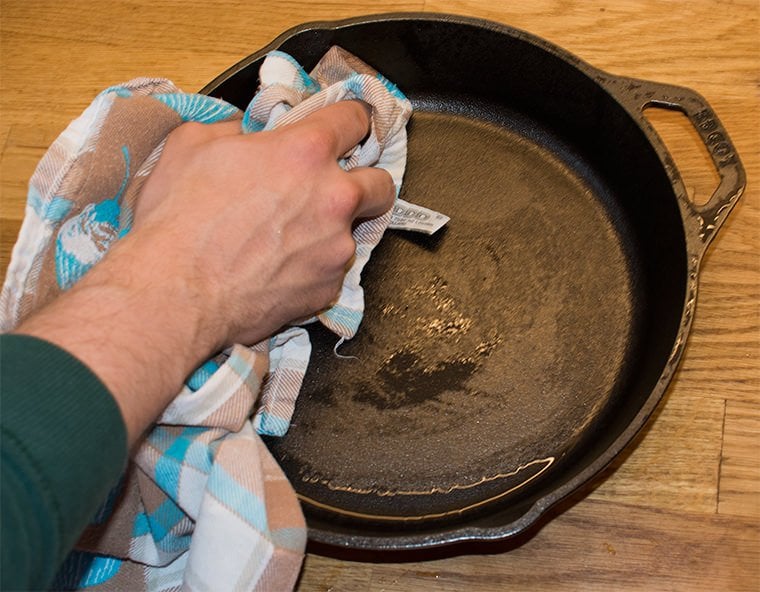
Step 2: Then dry the cast iron pan thoroughly.
Step 3: Add a tablespoon of linseed oil (available at any supermarket) to the pan.
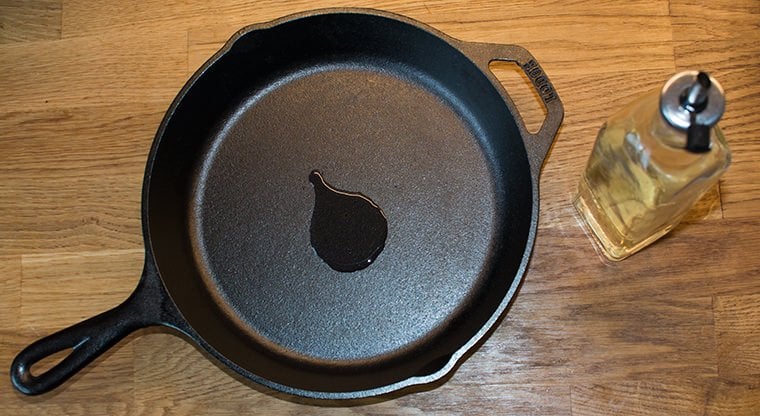
Step 4: Spread the oil well over the whole pan (inside and outside). Make sure you spread it evenly so you don't get any drips. The end result is a thin layer of oil all over the pan.
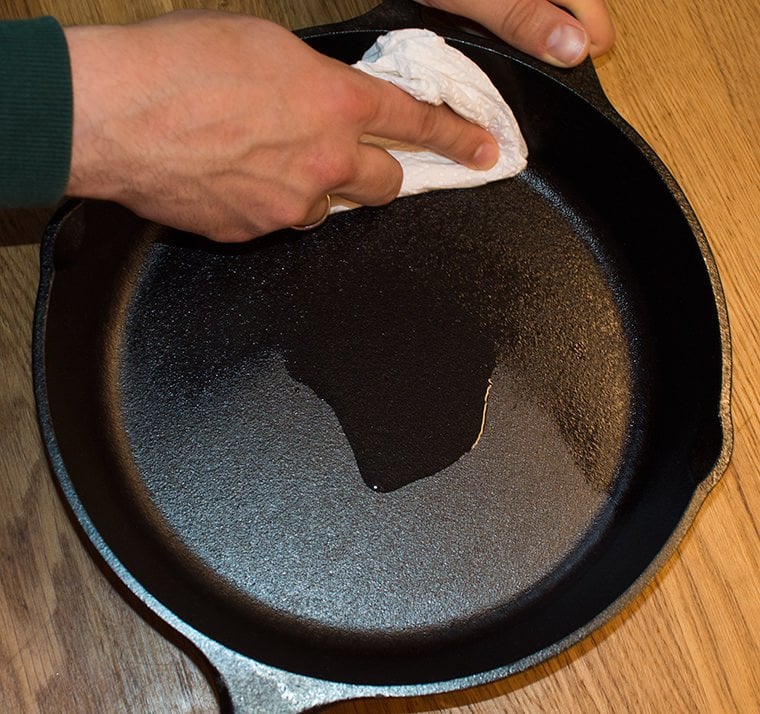
Step 5: Wipe the pan again with a kitchen paper so that there is no extra oil anywhere on the pan (there is enough in the pores to form a layer).
Step 6: Turn on the oven and set the temperature around 200 degrees Celsius.

Step 7: Place the oven plate covered with aluminum foil in the oven and put the pan upside down on the grill plate above it. The aluminium foil will ensure that any drips are collected.
Step 8: Leave the pan in the oven for one hour. After the hour, turn the oven off and let the pan cool in the oven.
Step 9: Now that you're cooking, your pan is ready to use!
Cleaning a cast-iron pan
Regular cleaning
The best way to clean a cast iron pan is with a little water and a soft sponge. If the pan is very dirty you can use a little soap, but make sure that you rinse it thoroughly afterwards. Preferably don't use a hard sponge or an aggressive soap. This can damage the natural non-stick coating.
Easy sterile cleaning
Another possibility is to heat the pan considerably. As soon as the temperature rises above 115°C, the bacteria are killed and the pan becomes sterile. The high temperature will also loosen any food residue from the pan, so all you have to do is wipe it clean with a cloth.
Scrubbing clean
If you want to clean the pan even better you can also add a little salt to the pan and heat it. Preferably some larger grains, like sea salt. As soon as the pan starts to smell you can use a cloth or kitchen paper to scrub the pan clean with the salt. You will see that the salt is discolored. After scrubbing, throw away the salt and wash the pan with water. Then put a drop of oil (preferably peanut oil, not olive oil) and wipe it with a paper towel all over the pan.
Resetting the pan (starting over)
Only for pans without an enamel layer on the inside
If the natural non-stick coating is damaged, or if you want to apply a new coating, use a steel sponge (Brillo) and scrub the pan thoroughly. After scrubbing for a while, the pure cast iron will be visible. Make sure you scrub the whole surface equally well. Then rinse and dry the pan thoroughly. Your pan is now back to its original state and ready to be fired again.
Damaged layer in a pan
Help! My pan has damage to the enamel coating! We get these kinds of messages all the time. It's always a shame when your pan gets damaged. Luckily you can still use the pan.
The damage is in the enamel layer. This is a kind of glass layer over the pure cast iron steel. These are natural materials that pose no health risks. We do recommend that you oil the area after use. Otherwise it may rust. Otherwise, you can just use the pan as usual.
See our range of cast iron
More info about frying pans?
Would you like more info about (cast) iron skillets? Read the following article Buy a frying pan.
Doyou have any questions or comments?
We are at your service. You can reach us at 020-6122824, info@meesterslijpers.nl or of course in our shop.
Did you find this interesting? Help us by sharing it with your friends.
 Share
Share
 Tweet
Tweet
 Pin
Pin
 Email
Email
 Share
Share
 Share
Share
Share
Share
